For many students, taking notes in class is a routine task. But for Deaf, hard-of-hearing, or special needs students, it can be a daily challenge. Trying to listen, lip-read, and write at the same time often means missing valuable parts of the lecture.
Today, AI tools are helping make education more inclusive by turning spoken lectures into readable, organized, and searchable notes. These tools support students with hearing loss and other special needs so they can follow lectures in real time and review material later without gaps.
If you or someone you know is preparing for university and needs better accessibility tools, this guide walks through how AI note takers work, real success stories, and turn your lectures into organized study materials for free.
The University Challenge for Students with Disabilities
The jump from high school to university is big for everyone. But for students with hearing loss, deafness, or other disabilities, the academic environment presents unique hurdles.
- Pace and Volume: Lectures are often long and filled with information. A student can't pause a live professor to ask them to repeat a point.
- Reliance on Peers: Relying on a classmate's notes is a gamble. Are they accurate? Are they complete? Did they capture the nuance?
- Cognitive Load: When a student strains to hear or process spoken words, their cognitive load increases. This leaves less mental energy for understanding the material itself. "Note Taking for Students with Hearing Loss" becomes less about learning and more about simple survival.
A Real-World Search for a Solution
A parent on Reddit recently posted a question that captures this problem perfectly:
"AI Note taker for 'special needs' student
My child will be attending university in the fall and has a 504 plan in place which allows for accommodations. Those include an AI note taking program to run while lectures are happening. We're looking for something that will listen, summarize, organize, highlight key information etc. I think they'll be going with a MacBook Pro or MacBook Air... Any help is appreciated!"
This parent is looking for a tool that does more than just type what it hears. They need an "ai lecture note taker" that understands, organizes, and summarizes. This is exactly where modern AI tools excel.
Case Studies and Success Stories
Many colleges have already shown what AI note taking can achieve. As reported by Glyph, universities have implemented real-time transcription and captioning tools to support Deaf and hard-of-hearing (HoH) students.
Here are some highlights:
XYZ University introduced live transcription for all major lectures. Sarah, a senior in computer science, shared:
"Before this, I often missed crucial details. Now, I can fully participate and follow everything as it happens."ABC College adopted speech recognition software. John, a sophomore, said:
"The automated lecture notes have been a lifesaver. I don't have to rely on incomplete handwritten notes anymore."University of DEF integrated classroom tools for automatic note taking. Samantha, a Deaf student in education, said:
"I finally feel included. The captions and transcripts help me engage and ask questions in class."GHI College found even broader results. Jessica, a psychology major, noted that her grades and confidence both improved after using AI transcription.
These stories show how equal access can change outcomes. Automated note taking helps create a level playing field for all students.
Features That Make AI Note Taking Work
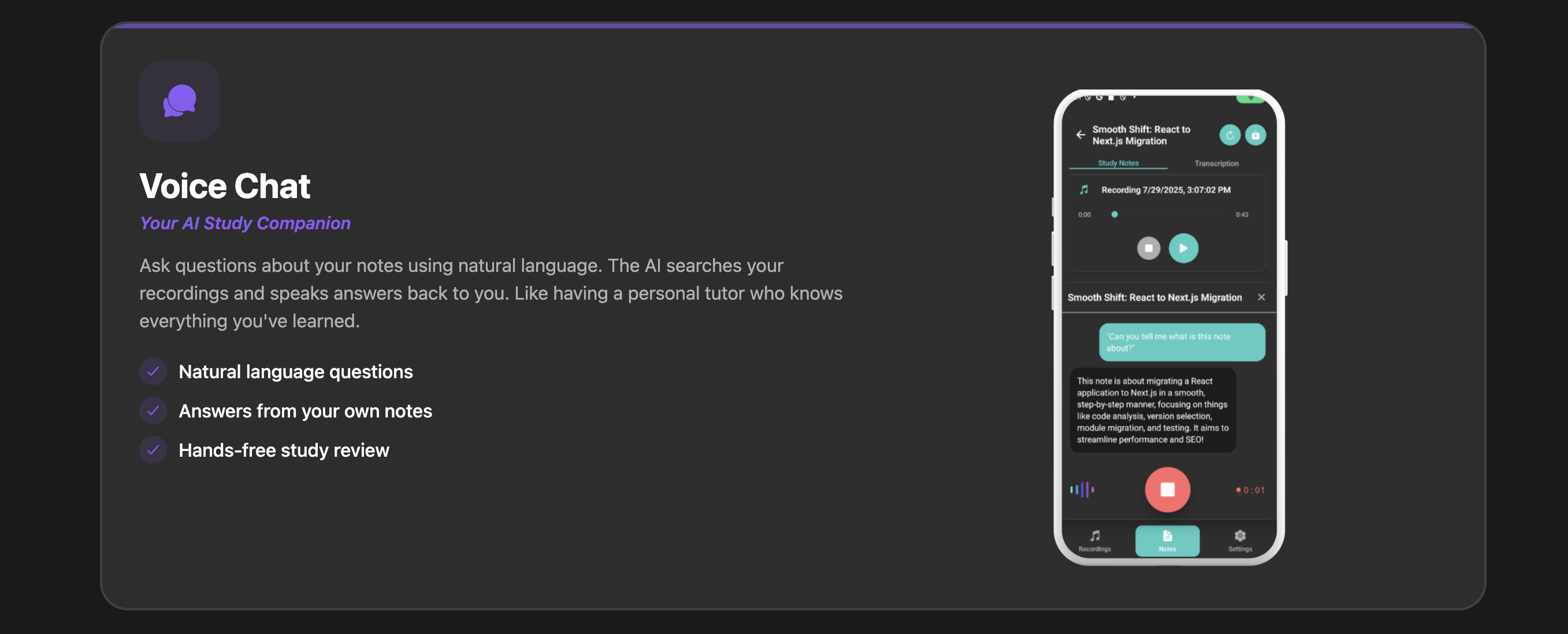
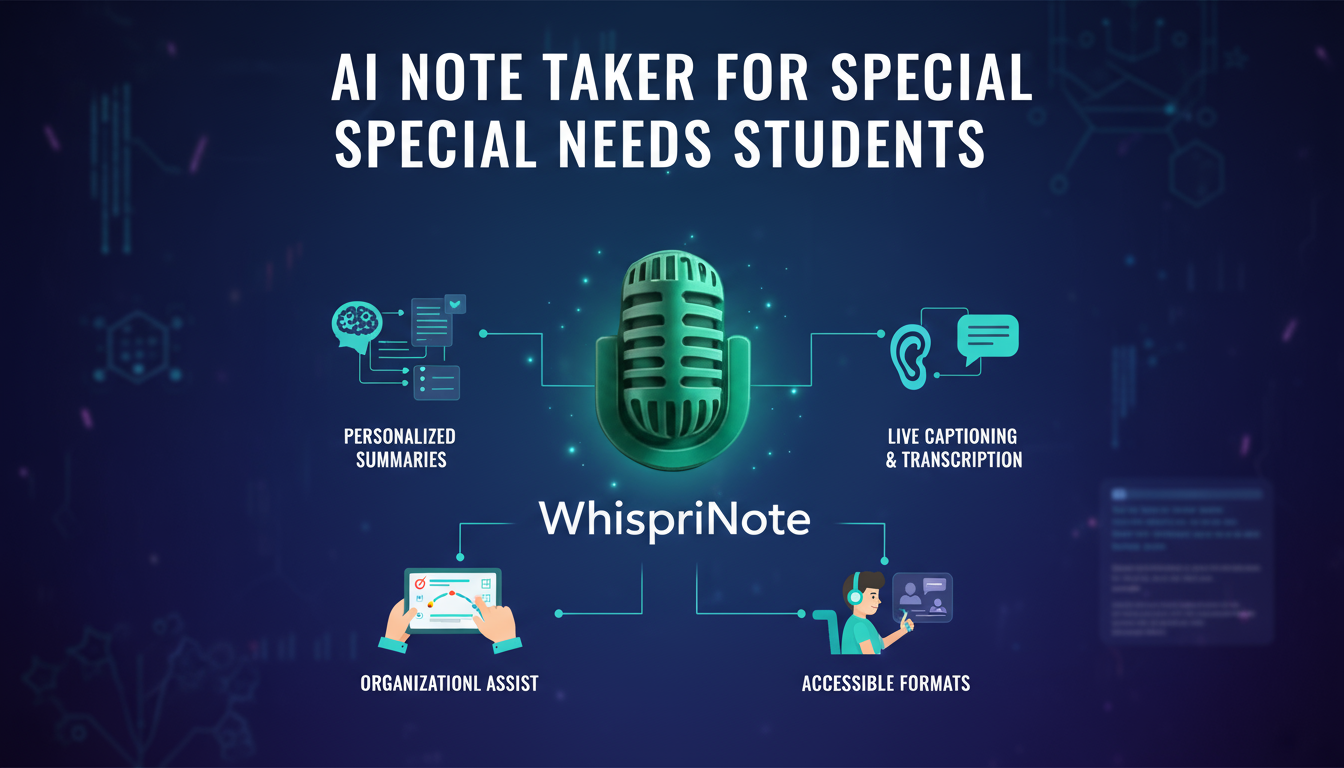
One tool making a strong impact is WhispriNote. It combines transcription, smart summaries, and visual study aids in one platform. Here's how it helps students study more effectively:
1. Automatic Transcription
Record lectures, meetings, or videos and receive accurate transcripts instantly. It works even in noisy classrooms.
2. Structured Study Notes
Instead of long text blocks, the AI turns raw audio into clean summaries organized by topic and importance.
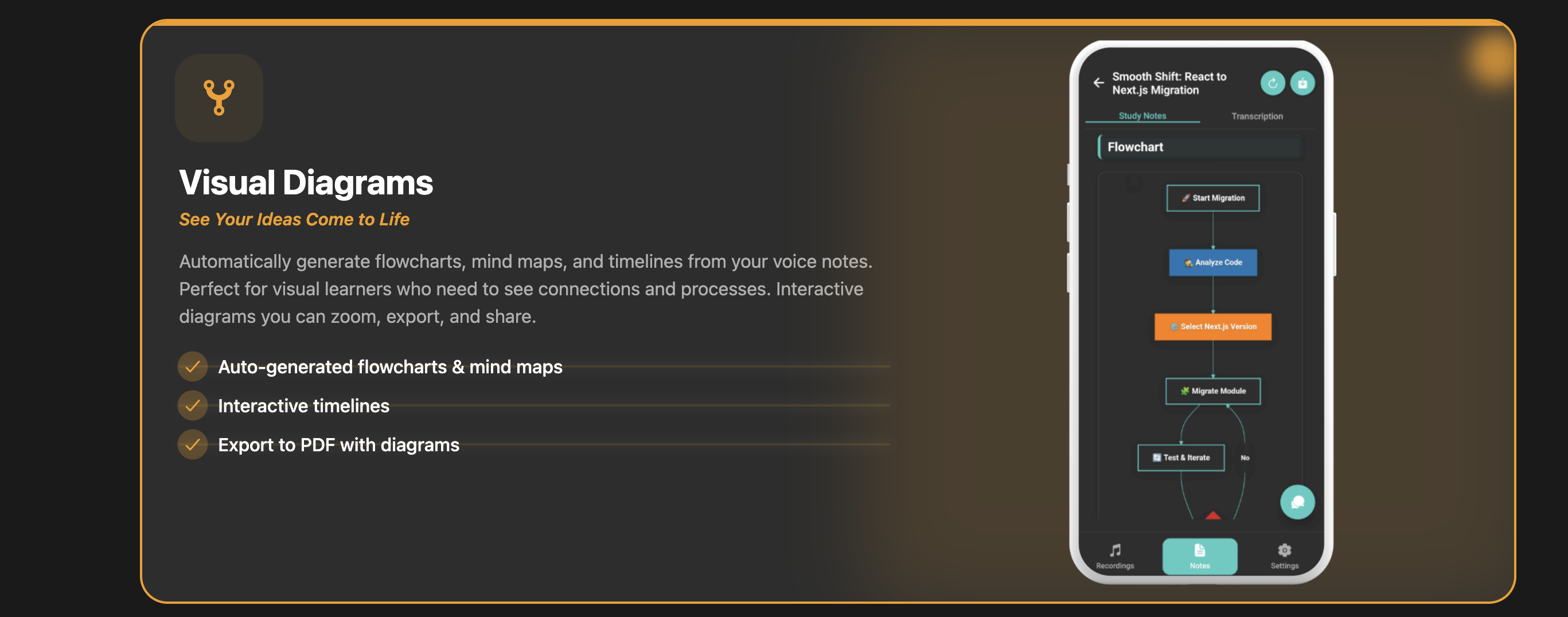
3. Visual Learning Tools
WhispriNote can generate flowcharts, mind maps, and diagrams to help students remember concepts visually.