You sit in class. The professor starts talking. You write furiously. Your hand cramps. You try to catch every word.
Then the exam comes. You look at your notebook. It is a mess of scribbles. You cannot find the main concepts. You wasted hours writing, but you did not learn.
Good student notes are not about writing everything. They are about writing the right things in the right format.
If you change how you structure your page, you change how your brain processes information. You spend less time reviewing and more time understanding.
Stop struggling with messy notebooks.
Turn your lectures into perfect notes automatically with Whisprinote.
Why Structure Matters More Than Speed
Most students think note-taking is a race. They try to beat the professor's speaking speed. You will always lose that race.
A template forces you to slow down. It forces you to organize information as you hear it.
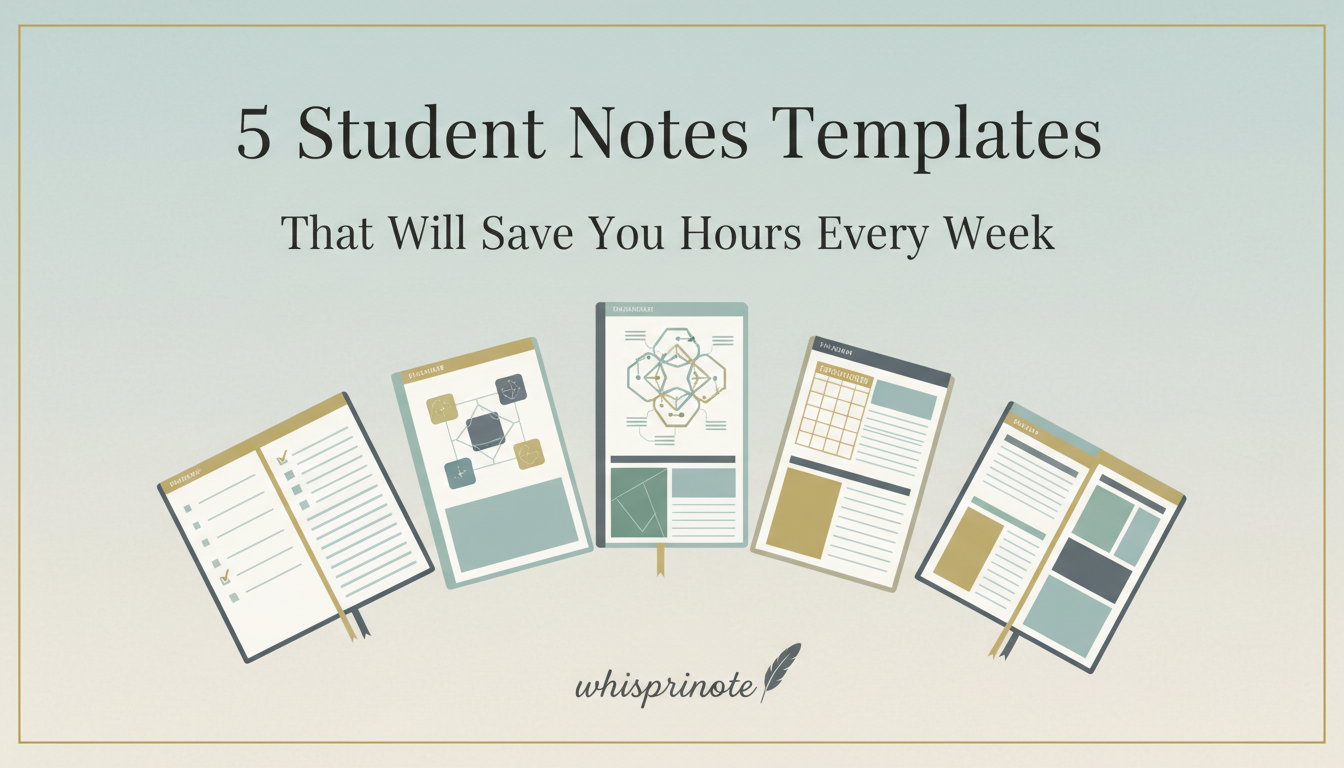
Here are 5 proven templates for notes for students that work for different learning styles.
1. The Cornell Method (The Reviewer's Best Friend)
This is the gold standard for many college students. It forces you to summarize as you go.
The Structure: Divide your page into three sections:
- The Cue Column: A narrow column on the left (about 2.5 inches).
- The Note-Taking Area: A wide column on the right (about 6 inches).
- The Summary Section: A box at the bottom of the page (about 2 inches).
How to use it: During class, write details in the Note-Taking Area. After class, write keywords or questions in the Cue Column. Finally, write a brief summary at the bottom.
Best for: Classes that require heavy recall, like History or Literature. It builds a built-in study guide.
2. The Outline Method (The Organizer)
This is the most common method for student notes. It relies on hierarchy.
The Structure:
- Main Topic (Header)
- Sub-topic (Indented)
- Supporting detail (Indented further)
- Supporting detail
- Sub-topic
- Sub-topic (Indented)
How to use it: Use bullet points. Indent every time the professor moves to a more specific detail. Keep your points short.
Best for: Structured lectures where the professor follows a clear slide deck. This is often the default, but if the lecture jumps around, your outline will get messy fast.
Check out our guide on how to use Whisprinote for effective studying to see how AI can create outlines for you automatically.
3. The Mapping Method (The Visual Learner)
Some lectures are not linear. They jump between ideas. A list does not work here. You need a map.
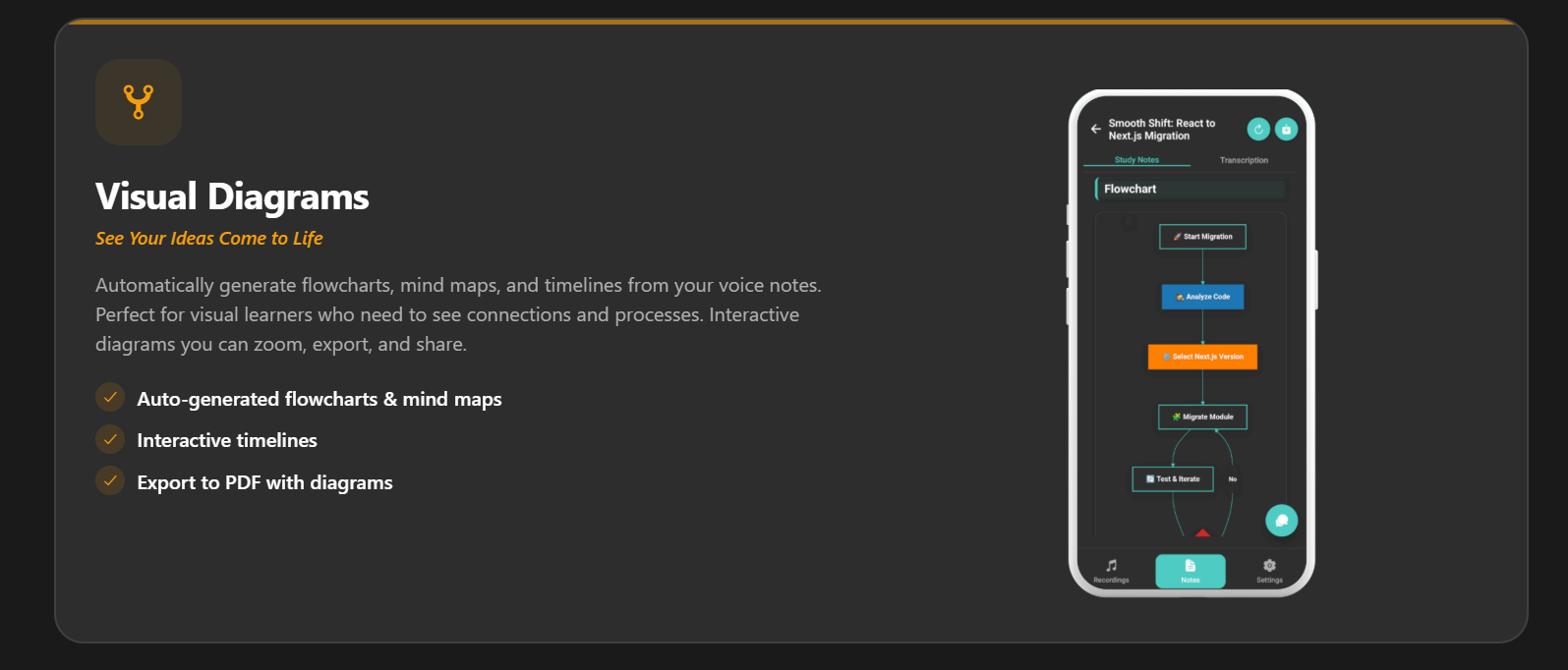
The Structure: Start with the main concept in a bubble in the center of the page. Draw lines branching out to sub-topics. Draw smaller lines to details.
How to use it: Think of it like a tree or a web. Connect related ideas with lines. Use colors to group similar themes.
Best for: Visual thinkers and dense subjects. This is very popular among engineering students who need to connect complex systems rather than just memorize definitions.
4. The Charting Method (The Comparer)
Use this when the lecture focuses on facts, dates, or comparisons.
The Structure: Divide your paper into columns. Label each column with a category (e.g., "Date," "Event," "Key Figures," "Outcome").
How to use it: Listen for the categories. When the professor mentions a new war, chemical, or theory, fill in the row across the columns.
Best for: Subjects with heavy data. Medical students find this useful for comparing symptoms, drugs, and treatments.
5. The "No-Writing" Method (The Time Saver)
Templates help, but they still require your full attention on writing. You might miss a key insight because you were busy drawing a column.
The smartest students today use AI.