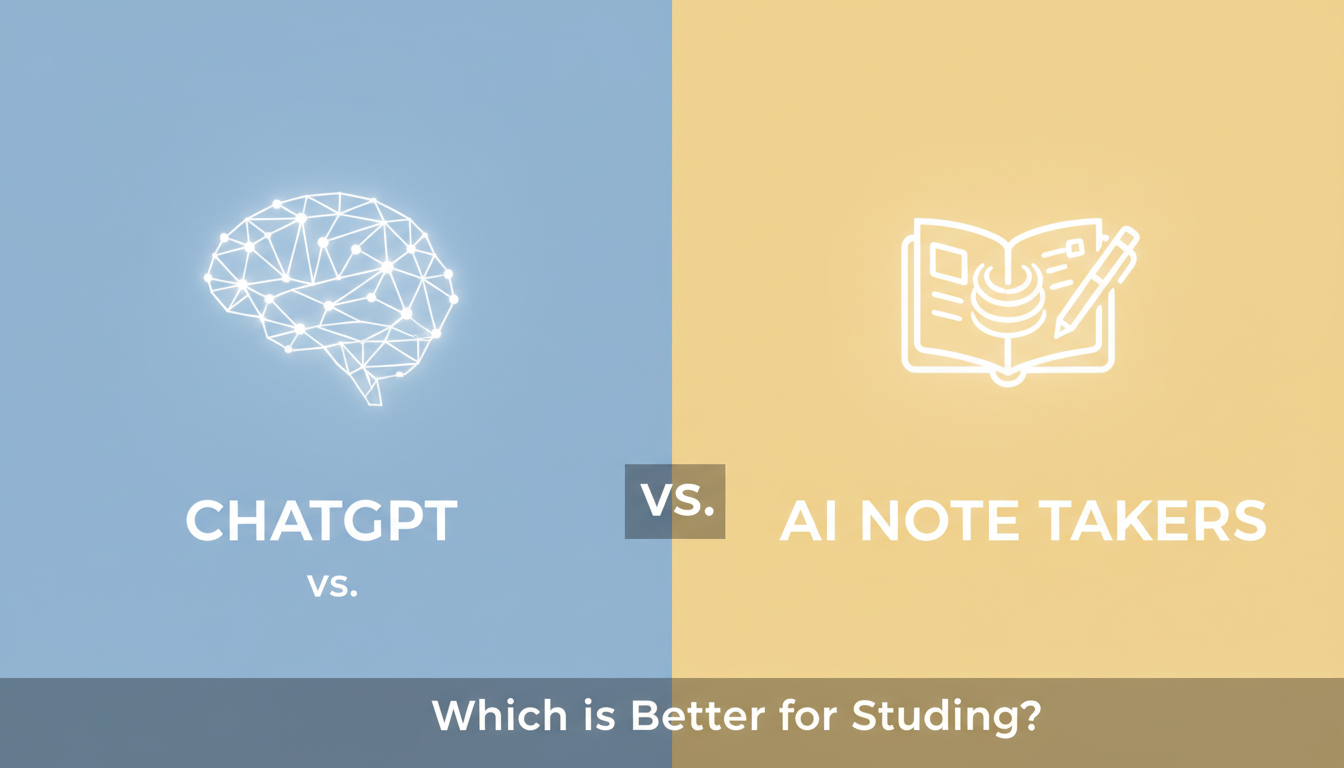
We all love ChatGPT. It helps us write emails, fix code, and plan trips. Naturally, ChatGPT for students became the go-to solution for help with schoolwork.
But there is a problem. ChatGPT is a text generator. It is not a listener.
When you sit in a lecture or watch a long educational video, you are dealing with audio and visual information. ChatGPT cannot hear your professor. It cannot see the slide deck.
So, if you want to study smarter, you need to know the difference between a chatbot and a dedicated AI note-taking app.
This guide compares the two to help you choose the right tool for your grades.
The Limitation of ChatGPT for Students
ChatGPT is brilliant at answering questions. But it fails at capturing live information.
If you want ChatGPT to take notes for you, you have to do the heavy lifting first. You must record the audio. Then you must transcribe it using another tool. Finally, you paste that text into ChatGPT.
That is a lot of steps.
While ChatGPT for students is great for writing, here is why it fails at note-taking:
- No Timestamps: ChatGPT gives you a summary. But it won't tell you when the professor said it. You cannot click a sentence to hear the original audio.
- Hallucinations: Chatbots sometimes make things up. In a law or medical exam, a made-up fact causes you to fail.
- Input Limits: You cannot paste a 2-hour transcript into the free version of ChatGPT. It is too long.
ChatGPT is a "text processor." It is not a "lecture capturer."
What is a Dedicated AI Note Taker?
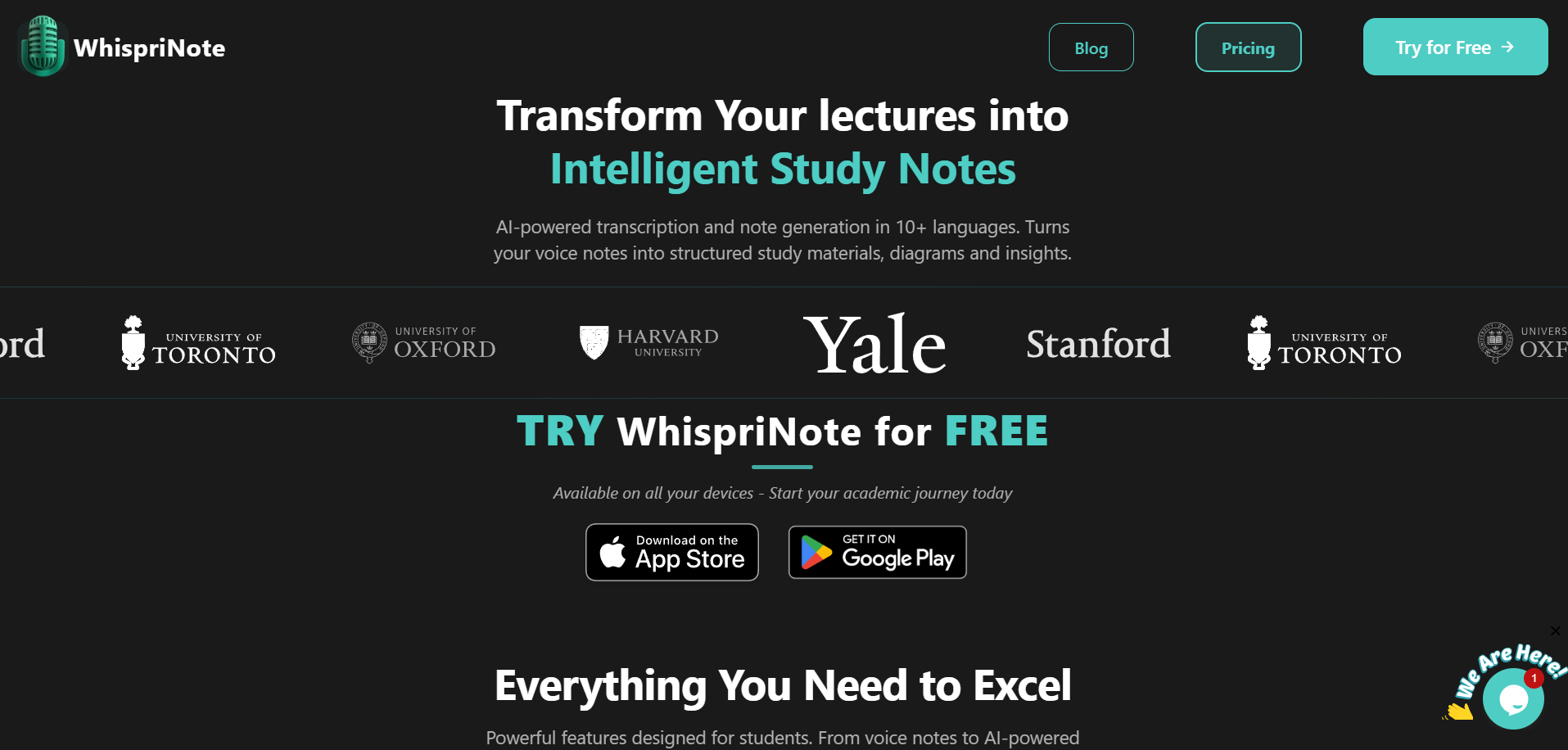
An AI note taker, like Whisprinote, is built for one job: turning spoken content into study material.
It connects directly to the source. You press record in class. Or you paste a YouTube link. The AI listens, transcribes, and organizes everything instantly.
Let's break it down:
- It Listens: It records audio directly on your phone or computer.
- It Organizes: It separates speakers and creates headings automatically.
- It Visualizes: Tools like Whisprinote create mind maps and flowcharts from the audio.
This is why dedicated tools are often the best AI note takers for study. They understand the context of a classroom or a meeting.
Head-to-Head: ChatGPT vs. Whisprinote
Let's look at how the typical workflow of using ChatGPT compares to a dedicated tool like Whisprinote.
| Feature | ChatGPT | Whisprinote (AI Note Taker) |
|---|---|---|
| Input | Text only (mostly) | Audio, Video, YouTube Links, Mic |
| Process | You paste text manually | Automatic recording & processing |
| Timestamps | No | Yes (Syncs text to audio) |
| Visuals | None (Text only) | Mind maps, Flowcharts, Timelines |
| Accuracy | Can hallucinate facts | Sticks strictly to the recording |
| Use Case | Brainstorming & Writing | Lectures, Seminars, Videos |
If you are writing an essay, use ChatGPT. If you are trying to learn from a lecture, use a note taker.
Why Context Matters for Studying
Studying is about linking ideas.
A chatbot sees text strings. A dedicated note taker sees a lesson.
For example, law students deal with dense case studies. They need to know exactly what the professor said about a specific ruling. A generic summary is not enough. You need the specific phrasing.
We built specific features for this. An AI lecture note taker for law students needs to be precise. It needs to handle legal jargon. Whisprinote anchors the summary to the timestamp. You can verify every word.
The same applies to video. YouTube is a massive school for many of us. But watching a video is passive. Using a tool to convert YouTube videos to notes makes it active. You get a searchable text version of the video in minutes. ChatGPT cannot do this directly.