← Back to Blog

How to Transcribe Voice Memos to Text (iPhone + Android) - Step-by-Step (2026)

By WhispriNote Team
December 25, 2025
5 min read
How to Transcribe Voice Memos to Text (iPhone + Android) - Step-by-Step (2026)
WhispriNote
Try WhispriNote free
Paste a YouTube link to turn any lecture or tutorial into clean, structured study notes.

If you've ever recorded a lecture, meeting, or quick idea in Voice Memos (or any voice recorder app), you've probably had this moment:

"I don't want to re-listen to this... I just want the text."

This guide shows the fastest ways to transcribe voice memos to text on iPhone and Android, plus the best workflow if you want to turn that transcript into clean notes, summaries, and study-ready takeaways.


Quick answer (best method depends on your phone)

  • iPhone: If your iPhone supports it, you can transcribe right inside Voice Memos.
  • Android (Pixel): The Recorder app can generate and export transcripts.
  • Any phone (best for students): Upload your audio to WhispriNote to get the transcript and automatically turn it into organized study notes.
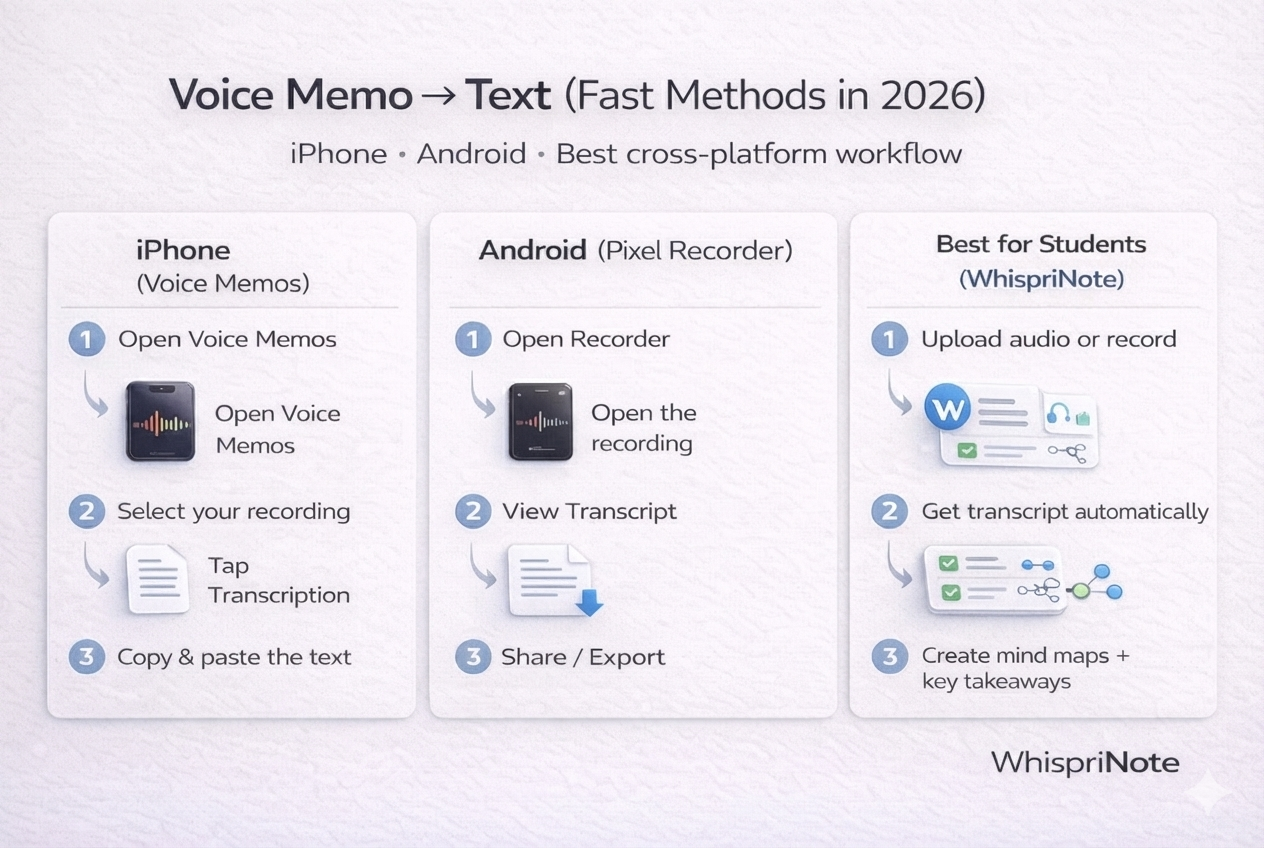
Voice Memo to Text steps infographic


Method 1: Transcribe Voice Memos on iPhone (Voice Memos app)

If your iPhone supports Voice Memos transcription, this is the quickest path.

Step-by-step

  1. Open Voice Memos.
  2. Tap the recording you want.
  3. Tap Transcription (or the transcript option).
  4. Copy the text and paste it into Notes, Google Docs, or wherever you need it.

Best for

  • Short to medium recordings
  • Quick copy/paste tasks

Not ideal for

  • Turning transcripts into structured notes (headings, summaries, key terms, diagrams)

Method 2: Transcribe on Android (Pixel Recorder)

On many Google Pixel phones, the Recorder app can create transcripts and let you export/share them.

Step-by-step

  1. Open Recorder.
  2. Open the recording.
  3. Tap Transcript.
  4. Use Share/Export to copy the text out.

Best for

  • Pixel users who want simple transcription fast

Not ideal for

  • Converting raw transcripts into study guides automatically

Method 3 (Best workflow): Turn any voice recording into study notes with WhispriNote

Here's the problem with "just transcription":

A transcript is usually a messy wall of text.

If you're a student, you want:

  • Clean headings
  • Key takeaways
  • Definitions
  • Examples
  • Exam-style summaries
  • Sometimes even mind maps / flowcharts

WhispriNote is built for that.

Step-by-step (works on any device)

  1. Open WhispriNote.
  2. Upload your voice memo (or record directly).
  3. Get an automatic transcript.
  4. Generate structured notes (summary + key points + important terms).
  5. Optional: generate visual notes like mind maps and flowcharts.

Here is what the output can look like:

WhispriNote study notes example

Sample structured notes generated from a voice memo.

WhispriNote flowchart example

WhispriNote
Turn this workflow into notes in minutes
Get timestamps, summaries, and study-ready outputs without pausing the video.
Example flowchart generated from the same recording.

WhispriNote mind map example

Example mind map that groups the main ideas.

If you want the broader "audio -> study system" workflow, these related guides help:


How to get better transcription accuracy (any app)

If your transcript is coming out messy, try these quick upgrades:

  • Record closer to the speaker (or use earbuds as a mic)
  • Reduce background noise (fans, cafeteria noise, traffic)
  • Avoid placing the phone flat on a vibrating desk
  • If it's a lecture, sit near the front or center
  • If there are multiple speakers, keep the phone stable and centered

A cleaner recording = better transcript = better notes.


FAQs

Is there a free way to transcribe voice memos to text?

Sometimes, yes:

  • Some phones support built-in transcription.
  • Some apps offer limited free transcription.

But if you want a transcript plus structured notes, summaries, and visuals, a purpose-built workflow saves hours long-term.

Can I transcribe long voice memos (like a full lecture)?

Yes - but long recordings are where basic tools feel painful:

  • you still end up cleaning text manually
  • organizing takes forever

That's why students typically prefer a "transcript -> structured notes" workflow.

What if I recorded someone else - do I need permission?

Often, yes. Recording laws vary by location, so it's smart to:

  • ask for consent when possible
  • follow your school/work policies

The bottom line

If you only need text fast:

  • Use Voice Memos transcription (iPhone) or Recorder transcripts (Pixel).

If you want the best student workflow:

  • Use WhispriNote to go from voice memo -> transcript -> study notes (and optionally mind maps/flowcharts) without doing the tedious cleanup yourself.

Start Studying Smarter Today

Ready to improve your note-taking? Here's your action plan:

Get WhispriNote - Start free with up to 5 notes.

Or continue on the web app.


Keep Learning

Explore more articles on our blog.


Last updated: 2025-12-25 - Reading time: ~4 minutes

Tags:
transcribe voice memo to text
voice memo to text iphone
convert voice memo to text
voice recording to text
audio to text
transcription
study notes
WhispriNote
← Back to All Posts