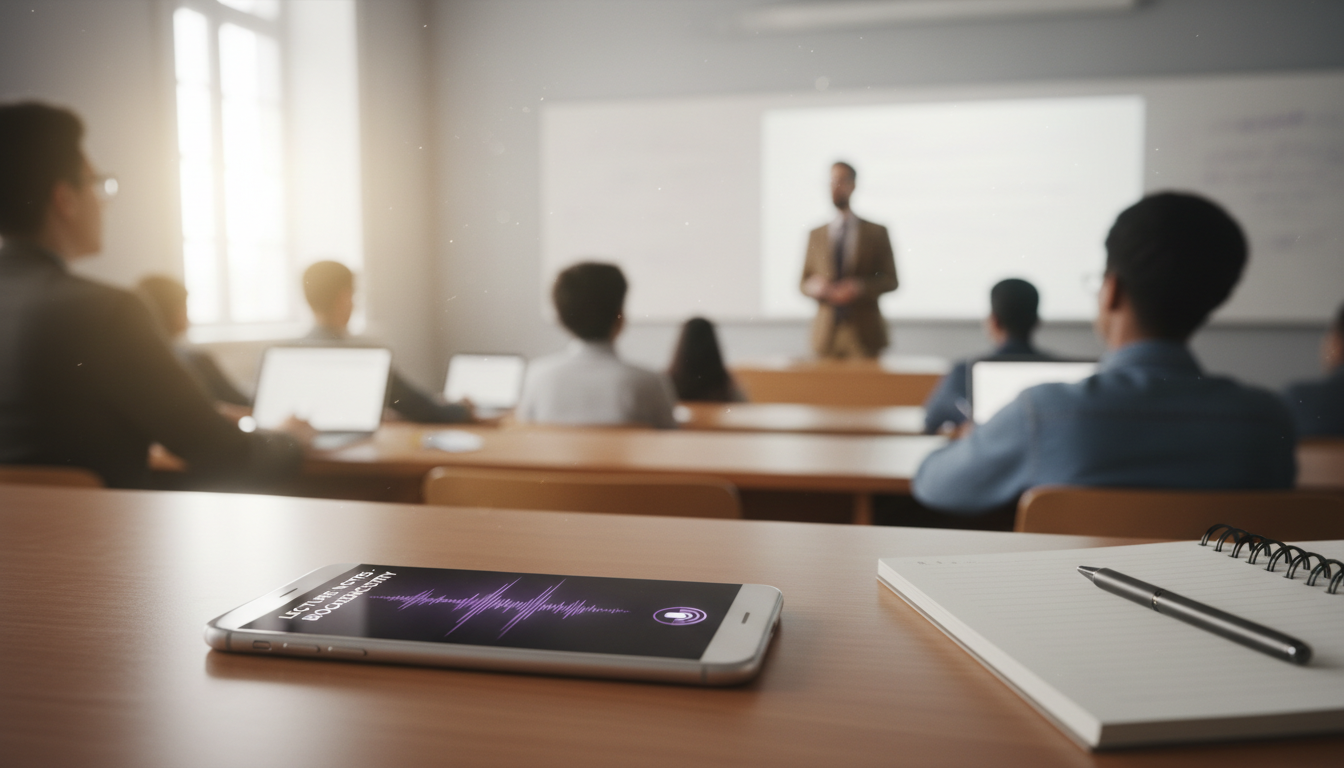
You sit in a lecture hall. The professor speaks fast. You try to write everything down, but you fall behind. You pull out your phone to hit "record."
Then you pause. Is this allowed? Could you get in trouble?
It is a common fear. You want to study better, not break the law.
The short answer is: It depends.
This guide breaks down the legal side of whether you can record lectures, explains university policies, and shows you how to do it the right way.
If you’re recording for study, start with the free YouTube-to-notes workflow. For longer videos, visual notes, PDF exports and voice chat with your notes, check pricing.
The Two Big Rules: Copyright and Privacy
When you want to record a class, two main laws come into play. You need to understand both to stay safe.
1. Intellectual Property (The Professor's Work)
In most colleges, the lecture belongs to the professor. Their words, their slides, and their explanations are their "intellectual property."
Here is why this matters: If you record a lecture and post it online or try to sell it, you violate copyright laws. You are stealing their work.
But, most laws allow for "Fair Use." This means if you record lectures strictly for your own personal study, it is often legally acceptable. You cannot share it. You cannot upload it to YouTube. It must stay on your device for your eyes only.
2. Privacy Laws (Wiretapping)
This is where it gets tricky. Privacy laws vary by state and country.
- Two-Party Consent States: In places like California or Florida, you need permission from everyone involved to record audio. This includes the professor and potentially other students speaking in class.
- One-Party Consent States: In places like Texas or New York, only one person needs to know the recording is happening. That person can be you.
Even in one-party states, a classroom is often considered a "semi-private" space.
The safe bet? Always assume you need permission.
You can read more about recording laws by state here.
University Policies vs. The Law
State laws are one thing. Your school's rules are another.
Even if the law says you can record, your university might say you cannot. Private institutions set their own codes of conduct.
Where to look:
- The Student Handbook: This lists the general rules for the campus.
- The Syllabus: This is the most important document. Professors usually state their recording policy clearly here.
If the syllabus says "No recording," do not do it. Breaking this rule is academic misconduct. It can lead to failing the class or even suspension.
Students in sensitive fields, like law, must be very careful. You can read more about tools specifically for these students in our guide on the AI lecture note taker for law students.
The Major Exception: Accommodations
There is one group of students who practically always have the legal right to record lectures.
If you have a documented disability (like dyslexia, ADHD, or auditory processing issues), laws like the Americans with Disabilities Act (ADA) (or Section 504) protect you.
How it works:
- You register with your school's disability services office.
- They approve "audio recording" as a reasonable accommodation.
- The professor must allow you to record, even if they have a "no phones" policy.
This levels the playing field. If this applies to you, check out our article on AI note-taking for special needs students.
How to Ask for Permission (Scripts included)
You do not need to hide your phone under a notebook. Being honest builds trust.
Here are the next steps to get approval:
Approach the professor early. Go to office hours during the first week. Do not ask right before class starts.
Explain "Why." Don't just ask to record. Explain that you want to engage more in the discussion rather than just writing.
The Script: