← Back to Blog

University Notes 101: Why High School Methods Fail in College

By WhispriNote Team
December 18, 2025
6 min read
University Notes 101: Why High School Methods Fail in College
WhispriNote
Try WhispriNote free
Paste a YouTube link to turn any lecture or tutorial into clean, structured study notes.

You crushed it in high school. You had a system. You sat in class, copied what the teacher wrote on the whiteboard, and memorized it for the test. It worked.

Now you are at university. You try the same thing. But you feel like you are drowning.

You write furiously. You miss half the lecture. You study for hours but still feel unprepared.

Here is the hard truth:

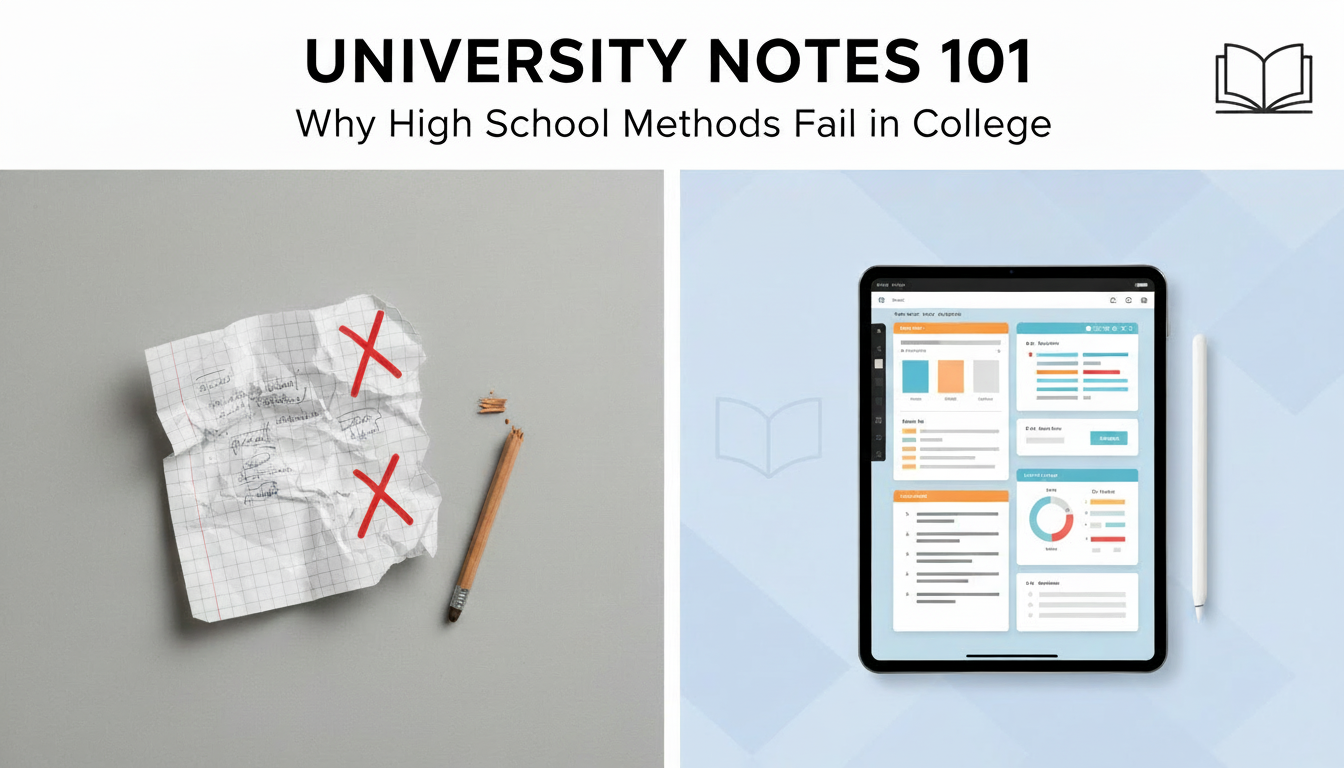
The game has changed. High school methods build high school grades. They do not work for university notes.

This guide explains why your old habits are hurting you and how to fix them.

Ready to ace your university exams? Get started with Whisprinote today on Web, iOS, or Android.


The Trap of "The Stenographer"

In high school, teachers guide you. They pause. They repeat things. They tell you exactly what will be on the test.

In college, professors lecture. They speak at about 150 words per minute. The average student writes by hand at about 30 words per minute.

Do the math. You cannot win.

If you try to write down every word, you stop listening. You stop thinking. You become a stenographer. You are just a machine moving information from the air to the paper without your brain touching it.

This leads to two big problems:

  1. Incomplete Academic Notes: You miss the logic connecting point A to point B because you were too busy writing down the definition of point A.
  2. Burnout: Leaving a lecture with a cramping hand and a tired brain is not a badge of honor. It is a sign of an inefficient system.

You need a new way to handle information.


Active Listening vs. Passive Recording

To survive university, you must shift from recording to understanding.

Your academic notes should not be a script of the class. They should be a map of the concepts.

Let's break it down:

  • High School (Passive): "The teacher said the mitochondria is the powerhouse of the cell. I will write that down."
  • University (Active): "The professor is comparing cellular respiration to a combustion engine. I need to note the relationship, not just the definition."

When you focus on the big picture, you learn better. But you still need to capture the details. This is where technology steps in to bridge the gap.

Read more about why this shift matters in our guide on why students should use AI for smarter note-taking.


The New Standard: AI-Assisted Learning

Smart students do not rely on speed-writing anymore. They use tools to handle the capture so they can handle the thinking.

This is especially true for dense subjects. If you are studying Medicine or Law, the volume of information is crushing. Missing one detail can change the meaning of a case or a diagnosis.

Enter Whisprinote:
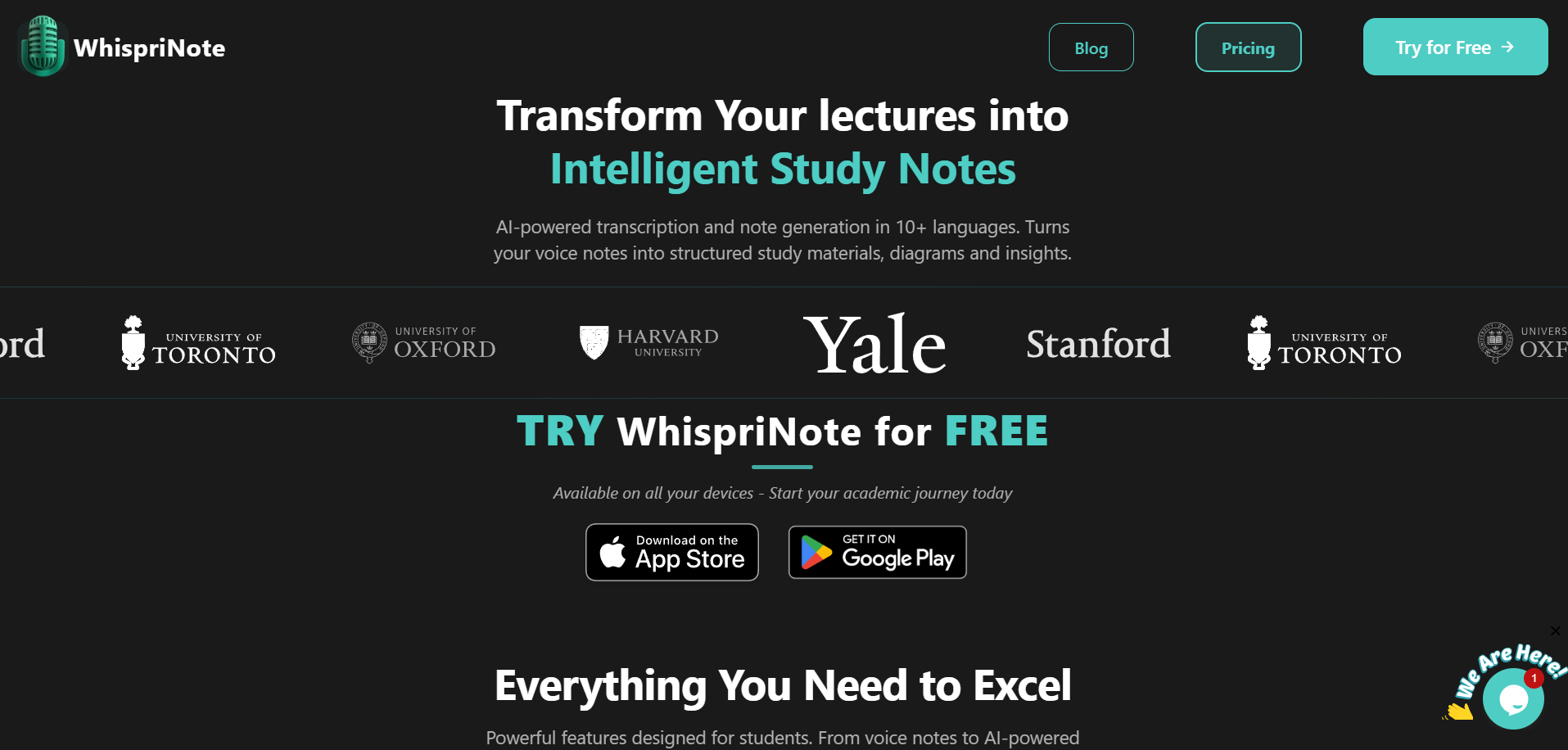
whisprinote landing page

Whisprinote is an AI note-taker built specifically for students. It records your lectures and instantly turns them into clear text, visual mind maps, and searchable summaries. It supports over 10 languages and keeps your data private on your device. Whether you are in a lecture hall or watching a YouTube tutorial, it captures every detail so you can focus on learning.

You can then spend your study time reviewing concepts, not trying to decipher your messy handwriting.

Check out how to use Whisprinote for effective studying to see this workflow in action.

WhispriNote
Turn this workflow into notes in minutes
Get timestamps, summaries, and study-ready outputs without pausing the video.

Beyond the Lecture Hall

University is not just about live lectures. You also have to deal with hours of online content.

Professors love to assign YouTube videos or recorded webinars. Treating these like Netflix is a mistake. You need to extract the data from them just like a live class.

Next steps for video content:

Don't just watch. Convert the content. You can take a YouTube link and turn it into a study guide instantly. This keeps all your academic notes in one searchable place.

We wrote a full breakdown on this here: How to convert YouTube video to notes.


Frequently Asked Questions

How to convert lecture recordings to text?

The manual way is to listen, pause, and type. This takes forever. The smart way is to use an automated tool. Apps like Whisprinote allow you to upload your lecture recording directly. The AI then processes the audio and gives you a full text transcript and a summary within minutes.

How to turn audio recordings into text?

You need Automatic Speech Recognition (ASR) software. You can upload audio files (like MP3 or WAV) to these services. They "listen" to the file and write out the text. For students, look for a tool that also identifies speakers and separates main topics from fluff.

Can ChatGPT transcribe lectures?

No, ChatGPT cannot "hear" audio files directly. It works with text. To use ChatGPT, you first need to get the text from the audio using a transcription tool. However, all-in-one tools like Whisprinote handle both steps. They transcribe the audio and use AI to summarize it, so you don't have to switch between apps. See our comparison on ChatGPT for students vs AI note takers.

How do I transcribe a lecture in Word?

Microsoft Word for the web has a "Transcribe" feature. You can find it under the "Dictate" dropdown menu. You can upload an audio file there. It is a useful basic tool, but it often struggles with technical terms or heavy accents compared to specialized study AI.

Is there a free AI to transcribe audio to text?

Yes, many tools offer free trials or limited free tiers. Google Docs has voice typing, but it requires you to play the audio out loud for the microphone to hear. For a more professional result with structured notes, Whisprinote offers a free trial to let you test the quality on your next lecture.


Final Thoughts

High school was about memorization. University is about management. You are managing a massive amount of information.

Do not let old habits slow you down. Ditch the stenographer mindset. Use the right tools. Build a system that lets you learn, not just write.

Ready to upgrade your note-taking?

Try Whisprinote for free today and turn your next lecture into your best study guide.


Start free with WhispriNote

Get WhispriNote - Start free with up to 5 notes.

Turn lecture audio into structured notes and diagrams in minutes.

Or continue on the WhispriNote web app.

Tags:
university notes
college study tips
study methods
ai note taking
WhispriNote
← Back to All Posts