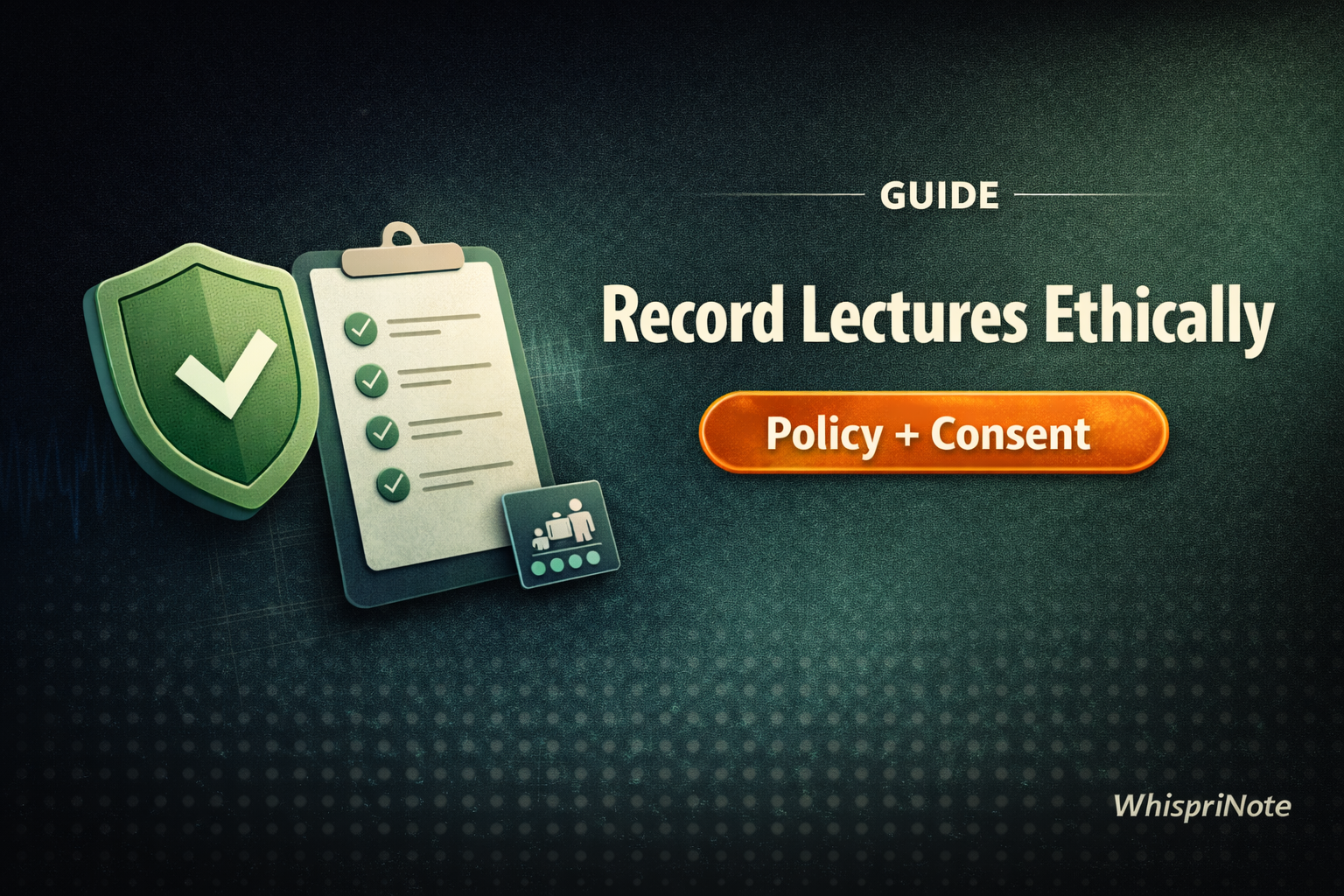
If recording is allowed, you can turn lectures into structured study notes (and visual diagrams) with WhispriNote. But first: do it ethically and by the rules.
This guide is about consent, policies, and good practice. It is not legal advice.
Quick verdict (2026)
- Always check your course and campus policy first (syllabus + student handbook).
- Ask the instructor if anything is unclear.
- Protect privacy: don't publish or share recordings without explicit permission.
- Use recordings to study, then delete/archive responsibly.
At a glance: an ethical recording checklist
| Question | Ethical answer | What to do |
|---|---|---|
| Is recording allowed in this class? | Only if policy/instructor allows | Check syllabus + ask if unclear |
| Are other students talking? | Protect their privacy | Avoid capturing peer discussion, or get consent |
| Will you share the file? | Only with permission | Don't upload publicly |
| How will you store it? | Secure + minimal retention | Private storage, delete when done |
Step 1: Check the syllabus and campus policy
Start with:
- your course syllabus (often has an explicit recording rule)
- your university/college student handbook or classroom policy page
If the policy is unclear, do not guess. Ask the instructor or TA.
Step 2: Ask for permission (when in doubt)
A simple message is enough:
- "Is it okay if I record audio for personal study only?"
- "I won't share it and I'll delete it after the exam."
If your instructor says no, respect it and use alternatives (below).
Step 3: Protect privacy (your classmates matter too)
Even when instructor recording is allowed, peer discussion can be sensitive.
Good practices:
- record only the instructor's lecture (avoid group discussions)
- sit closer to the instructor so you don't pick up other voices
- never post recordings publicly without explicit permission
Step 4: Use recordings to study (not to replace learning)
Recordings help when you:
- miss details in fast lectures
- want to review explanations before exams
- need a transcript for accessibility
But do not rely on recordings as your only study method. Turn them into structured notes.
Step 5: Turn an allowed recording into study notes (fast workflow)
Option A: Start from a video link
If your lecture is on YouTube or a public video platform, paste the link into YouTube-to-notes.
Option B: Start from a transcript
If your platform provides captions/transcripts, use: Transcript download guides.